The Healing Power of Beauty

In this fraught time of coronavirus, I’ll start with a fervent prayer for your wellness, my companions in this blog. A friend commented a few days ago that “isolation is exhausting.” Transitioning from the constant consumption of breaking news and other people’s opinions, to frantic busy-ness at home, to quiet reading and puzzle-solving, to endless online shopping—yes, I am exhausted and I think nearly everyone is by now. My best remedy for such ennui is to write, and so I have opened up my WordPress account and will revive a blog that is ready and waiting for the next post. I hope that my stories will make a connection to something in your life and bring you a moment of peace and perhaps a smile.

Today’s post is a story that I wrote for the Touchmark writing club. Each week residents are invited to submit a story told from their life experiences. This week’s prompt is to write about your most precious childhood possession and why it was important to you. I would love to read your memories and responses in the Comments section!
The Bangle Girl

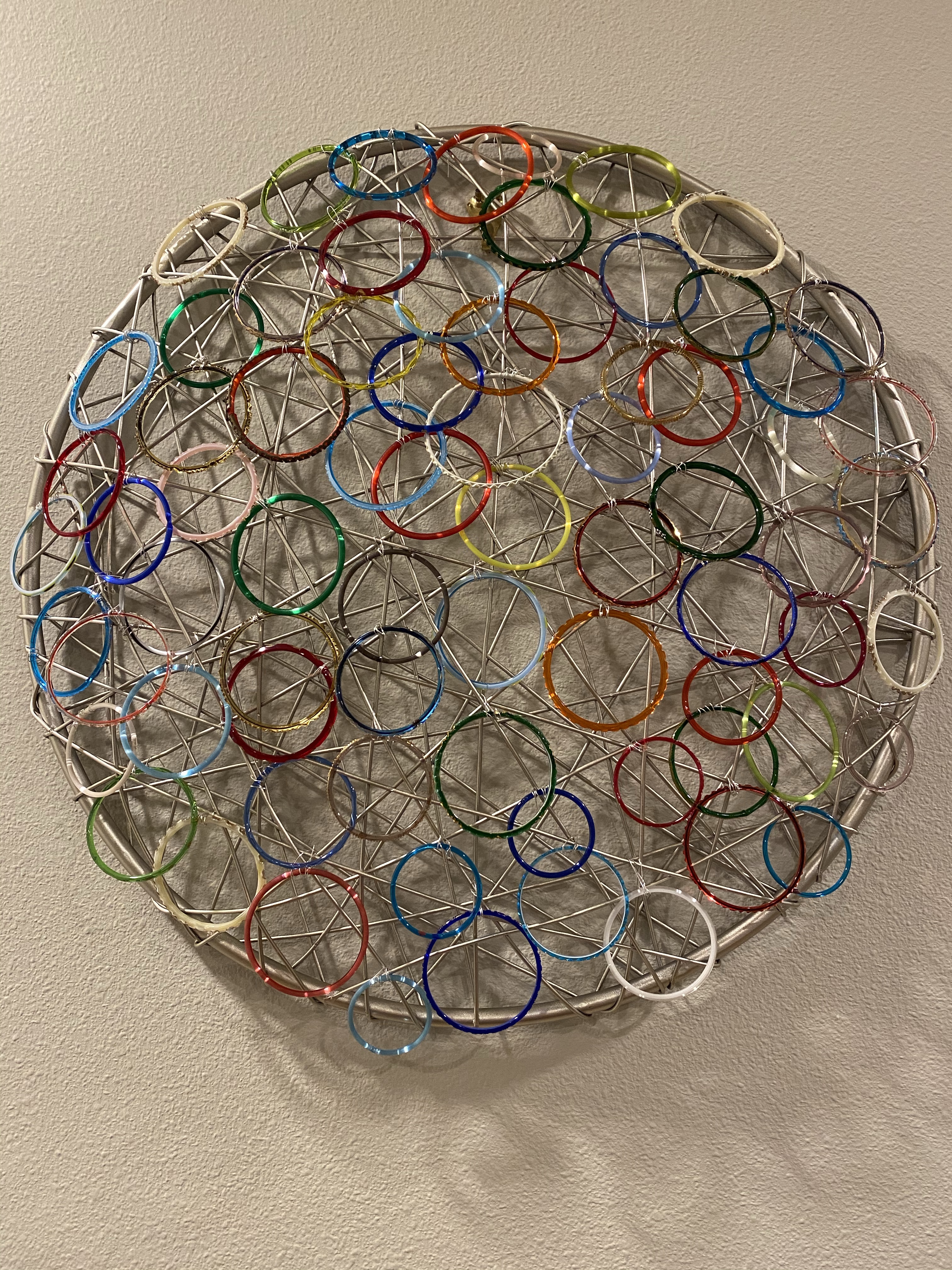
I came home from school with a sad look on my face. Something had troubled my seven-year-old heart and Mother wanted to salve my wound. She put aside her sewing and retrieved a box from the top shelf of her closet. Removing the lid, she held the box out for me to look inside. Something magical and precious lay shimmering in the soft cotton padding. Mother pulled out a rainbow of colored circles and spread them out on the bedspread.

“These are bangles from India. They’re made of glass and so they are fragile but you may hold them if you like.” I hesitated to touch them but Mother held one out and placed it in my open palm. It was dark red with delicate gold trim on the outer edge. Then she took the bangle, folded my fingers tightly into a wedge and slipped the red circle over my hand and on to my wrist. Color after color went on to my arm and erased my sadness.

“How did you get these, Mother? And when did you wear them?” My mother’s childhood in India was a source of great interest for me. I had heard my grandmother’s stories of their life in a village near Bombay where my grandparents were in charge of a mission school and medical dispensary but my mother rarely talked about her life there. Now I caught a glimpse of a ten-year-old girl named Lois attending school in the Himalayas, a thousand miles away from home. Each month her parents sent her a small allowance for personal expenses. Lois put most of it away and saved it for special trips to the local bazaar. There she would go with her friend Margo, straight to the glass bangle shop. There were so many colors and patterns and sizes to choose from! The bangles weren’t for dressing up or to be worn at all. Lois knew that they signified a married woman to the Indians. She simply liked them.

In 1926 Lois came to the U.S. to enter college in Indiana. The bangles came with her. She got married and the bangles moved with her from house to house, safe in their cotton padding in a box in the closet, until that day in 1952 when I came home crying. Occasionally she would bring them out again and we would “ooh” and “aah” at their beautiful fragility. For her birthday one year my father gave her a round crystal vase with deep lines etched into its surface. It served perfectly to hold the bangles. When sunlight struck the bangles inside the crystal ball hundreds of rainbows danced around the room.

With passing years Mother began to give away many beloved objects to her family. Perhaps remembering the day the bangles made me smile, she offered them to me to keep and treasure. I brought the bangles in their crystal bowl to my home in New Orleans and displayed them on a bookcase in my living room. When days of sadness and heartache came, I rested my eyes on the bangles. I imagined the women in India who were too poor to buy gold and silver, purchasing these bright glass circles to tell the world that they were married. The bangles began to represent the intertwining circles of love in my life, singularly beautiful and collectively a rainbow of strength and hope.

On a Saturday in late August 2005 my family and I heard dire reports about a hurricane named Katrina that was aiming for New Orleans. We hurriedly packed a few things and left town, five people and one old dog in our SUV, driving through the night to a motel in Houston. We expected to return home in two or three days and go about our lives. Early Monday morning we heard the first news reports about breaches in the levee system that protected the city and knew for certain that our house was one of thousands filled with water. All day we thought about how our lives had changed in the blink of an eye—or the crack of the levee.

Sleepless that night my mind traveled through my home, wondering what it looked like now. Without effort, the crystal bowl and its glittering glass bangles popped into my mind. Was it possible that such delicate objects had survived the storm? I knew the answer and my heart felt heavy. I could not form words to express my sadness. How would I ever tell my ninety-five year old mother?

Six weeks later we were settled in an apartment in Columbus, Ohio when word came that our neighborhood had reopened for residents to return to their homes in order to assess damage and salvage what they could. I traveled down the interstate past tall pine trees and utility poles stretched out along the highway like tinker toys. I drove into a city that had been my home for over thirty years but no longer looked familiar.

Emotions swirling, I didn’t know if I wanted to scream or cry when I arrived at my house and walked through the front door. A filthy brown line on the walls revealed where six feet of lake water had brewed for days. Mold and sludge and brown haze covered everything. The furniture had been pushed this way and that by the flood. I laughed at the chaos in the living room: the leather couch, now gray with mold, sat on top of the glass coffee table, every picture and mirror had fallen and shattered, every book opened up flat with words obliterated by mud. The teakettle had floated from the kitchen stove to the fireplace mantel and rested next to one of my husband’s shoes from the bedroom closet, suggesting decorations for a strange holiday.

And there before me on the hard concrete floor rested the crystal bowl, still filled with its rainbow of bangles shimmering in the sunlight. Like a soccer ball it floated, and as the water receded inch by inch, the bowl/ball gently lowered until it touched the floor. Not a single bangle had broken!

Beauty finds its way into ugly places, resting there silently until someone sees it. We need symmetry and color, harmony and single notes, things which startle and things that soothe. Words and sounds and patterns and ideas and textures and fragrances and flavors. I think of beauty as wholeness and completeness and possibility, as life itself. When we make a connection with something beautiful a little spark of healing energy passes through us. Take notice of beauty today.
Half of a Yellow Sun

Extraordinary and Unforgettable Books

Every few days as I scroll through my Facebook feed, images of a starving child or hands outstretched and grasping for food relief give me pause.  Thanks to persistent reporting, we have a documented history of the ongoing Saudi war on Yemen and U.S. complicity in its effects on the people of Yemen.  We cannot deny the inhumanity of weaponizing starvation as a tool of war.  But wait, haven’t I heard this story before?

Biafra is an indistinct memory from the late 1960s.  Back then I didn’t know exactly where Biafra was on the globe or the source of the conflict there.  I remember it more as a symbol of suffering people than as an historical event.  While America seethed with confusion over the Vietnam War, Biafra was one more fight for liberation.  From my memory I pull out strands of conversation at a faculty party Steve and I attended at Millikin University in 1969.  Perhaps we talked with other young professors about Biafra?  Perhaps I recall Newsweek cover stories or posters of starving children around campus?  It barely registered in a world gone crazy.

A couple of years ago a friend whose reading tastes are similar to mine recommended Americanah by Chimamanda Ngozi Adichie.  I devoured the book and craved more of Adichie’s writing and ideas.  Last year I discovered her earlier novel, Half of a Yellow Sun, which told a story of war as important today as it was in the novel’s time period of the 1960s.  This book peels away the superficial glory of fighting for a cause and reveals modern war in all its exhausting, sickening, degrading ways.  The terror invoked by an air raid siren, bombs aimed at civilian targets, forced movement of peoples from their homes and villages, mass starvation as a weapon of war, these were real tactics of the Nigerian civil war of 1967-1970.

The racist ideas of white America shape our expectations of what a novel set in Africa will describe:  a continent of largely illiterate, backward and superstitious ebony-colored people living in mud huts and preying on each other in modern adaptations of a primitive society.  Adichie’s Nigeria is populated with all classes of people from extremely wealthy to impoverished, living complex lives in the largest, most diverse, and best educated African nation.  Half of a Yellow Sun changed my thinking about the lives of the people who constitute the nation of Nigeria in the same way that Isabel Wilkerson’s The Warmth of Other Suns altered and enlarged my perception of the black experience of America.

The novel’s plot line nudges us along, from the comfortably smug lives of the educated professional class in the early 1960s to the rapid  deterioration into chaos, brutality and mass killing brought on by the civil war and its fight for liberation of the Igbo people.  The terrible truth of the story is that the utter chaos of war could happen anywhere, and has and still is.  But perhaps the more profound truth is that at the end of the story there is hope, and that too can happen anywhere, even in Biafra.

The best caption for what happened in Biafra was created by Adichie:  The World Was Silent When We Died.  The novel’s cast of characters includes Richard Churchill, an Englishman who comes to post-colonial Nigeria without a purpose, other than to write something.  His emotional distance from the events taking place there prevents him from actually writing anything, but he cannot forget the plea of a Biafran army colonel:  “The world has to know the truth of what is happening, because they simply cannot remain silent while we die.”  At the end of the war Richard bequeaths to Ugwu, a houseboy turned soldier turned writer, the right to name his book with the title Richard had planned to use, “The World Was Silent When We Died.”  As Richard explains to Ugwu, “The war isn’t my story to tell, really.”

But it is Adichie’s story to tell.  Of Igbo lineage, she grew up in a post-colonial Nigeria torn apart by competing interests and religious divisions.  Her family supported the liberation movement of the Igbo people from the larger and stronger nation of Nigeria, which had both British and Russian support, and members of her family suffered for their belief in a free Biafra.  Her novel can almost be read as a memoir, its emotional clarity bearing truth beyond any factual events or persons.

The story Adichie tells is one of movement.  Bodies move from one place to another, at times only moments ahead of the advancing Nigerian army.  The arc of life in Biafra moves from plentitude to bare survival.  Emotions sweep across the page and hearts move together and apart.  The reader, too, is moved from curiosity at a distance to the realization of witnessing a tragedy, one that is all but forgotten now.  We can avert our eyes from the worst of it, but it is still there in today’s Nigeria, birthed from colonialism and Western capitalist exploitation.  And yet we also see the pride and optimism of those who called themselves Biafran.  Their flag with its half of a yellow sun sewn into the center of black, red and green fields flew briefly, defiantly, and with hope.

Notes:

A movie based on the book was released in 2013.  Although Adichie worked on the adaptation of her book, the film is primarily a love story and minimizes the breadth and depth of the book’s essential message about war, liberation, and hope.

For a 50-year follow-up to the Nigerian civil war and its destructive remnants, view this video:  https://www.france24.com/en/20170901-revisited-biafra-nigeria-civil-war-landmine-famine-humanitarian-aid-obudu

The Library Book

In the next few weeks Dear Sister Shull will be sharing a few of her choices for good reads: fiction, memoir, history, perhaps a surprise or two.  Some of the books are classics, worthy of a fresh read, and some are brand new.  I begin with a book that I bought myself for Christmas and read slowly to savor every word.  I admit, I was hooked by the title!

Orlean, Susan.  The Library Book.  Simon & Schuster, 2018.

Part history, part detective story, part memoir, The Library Book is one good book.  Orlean moves the reader from an account of the horrific fire at the Los Angeles Central Library in April 1986 both backward, to the library of her childhood, and forward to the Los Angeles Central  Library of today.  The composite picture reveals the library as an institution that is much, much more than a physical repository for books.

Orlean, author of The Orchid Thief, was drawn to tell the story of the Los Angeles library fire when she first heard about it in 2011, soon after moving to LA.  She had been invited to tour the historic and architecturally renowned building in downtown Los Angeles and was duly impressed by its beauty and the richness of cultural expression represented by the building.  Toward the end of the tour her guide picked up a book and sniffed the pages deeply.  He commented, “You can still smell the smoke in some of them.”  “Smoke?  From when patrons used to smoke in the library?”  “No, from the fire.”   It was then that Orlean learned about the biggest library fire in American history, one which burned for seven hours, consumed 400,000 books, damaged another 700,000, and required nearly every firefighter in Los Angeles to extinguish the blaze.  How had she not known about this remarkable event for 25 years?  When she read the newspapers from April 29, 1986 it became obvious.  On that same day the fire was upstaged by another disaster of global proportions—the Chernobyl nuclear plant meltdown that threatened much of the earth with radiation.

The cause of the library fire has never been determined.  Any evidence that might have led to an answer was consumed by the flames.  But that did not prevent investigators from trying to solve the mystery.  The district attorney eventually arrested a man named Harry Peak with arson, but the case was later dropped for lack of evidence.  Peak was a Los Angeles character, a wannabe actor who preened before the cameras and told many versions of his whereabouts on the morning of the fire.  Orlean treats him sympathetically and in the end concludes that there is simply no way to unravel the mystery.

The heart of the book is not the story of the fire, or even the story of the remarkable building designed by Bertram Goodhue in the 1920s.  It beats with the lifeblood of this most American cultural treasure, the public library.  Orlean manages to condense more than a century of library history into the pages of her book by weaving the past, full of characters like Charles Lummis, with the many strands of present-day library work.  In page after page I could find myself in my own library settings and identify all of the tasks, the tools, and the skills that I used in my career in public, academic, and law libraries.  With wit and humor and insight, Orlean enlarges the recounting of the library fire into a remarkable tapestry of life among the books.

Orlean spans writing styles, from prosaic details of how fires burn to exquisite reveries on the purpose of libraries.  At times as I read I felt as though I floated on a current of  memory back in time to the libraries I have loved.  It is best to leave you, dear reader, with Susan Orlean’s own words about libraries to meditate upon:

There are so many things in a library, so many books and so much stuff, that I sometimes wondered if any one single person could possible know what all of it is.  I preferred thinking that no one does—I liked the idea that the library is more expansive and grand than one single mind, and that it requires many people together to form a complete index of its bounty. [page 266]

[Senior librarian Stone] once confided to me that when he worked at a branch downtown, local drug dealers used to come to the library and ask him to help fill out their tax returns.  He thought it was a perfect example of the rare role libraries play, to be a government entity, a place of knowledge that is nonjudgmental, inclusive, and fundamentally kind.  [page 267]

[In the library] the silence was more soothing than solemn.  A library is a good place to soften solitude; a place where you feel part of a conversation that has gone on for hundreds and hundreds of years even when you’re all alone.  The library is a whispering post.  You don’t need to take a book off a shelf to know there is a voice inside that is waiting to speak to you, and behind that was someone who truly believed that if he or she spoke, someone would listen… I was struck by how precious and foolish and brave that belief is, and how necessary, and how full of hope it is to collect these books and manuscripts and preserve them.  [page 309-310]

This is why I wanted to write this book, to tell about a place I love that doesn’t belong to me but feels like it is mine, and how that feels marvelous and exceptional.  All the things that are wrong in the world seem conquered by a library’s simple unspoken promise:  Here I am, please tell me your story; here is my story, please listen.  [page 310]


Remembrance Day

Sister Shull has been otherwise occupied for a few weeks, so it feels really good to sharpen my pencil and share with you some thoughts that have been on my mind of late, starting with why November 11 is important to me.

“Remembrance Day”

November 11 bears an unusually large number of identities.  The United States calendar lists it as Veterans Day, a time when we acknowledge, with heartfelt gratitude, the service of all veterans throughout our nation’s history.  This holiday focuses our attention on those who are presently serving in one of the branches of the military or those who did so in the recent past.  Their sacrifices and commitment deserve to be honored today and every day.  I add to that number those who have served in peaceful causes—volunteers in alternative national service, diplomats who craft treaties and peace agreements, negotiators who resolve disputes without resorting to armed conflict.

Before the law was changed in 1954, November 11 was known as Armistice Day, a historical event of 1918, one hundred years ago today.  In elementary school I learned about the silencing of the guns on the 11th hour of the 11th day of the 11th month, putting an end to the most horrific war ever waged between nations.  In early November 1918 German commanders knew the situation was desperate for their army, and as proposals were made to end the fighting it was suggested by the French to time the ceasefire at 11:00 a.m. on 11/11.  The Armistice was signed but fighting continued, literally, until the last minute.  On the last day of World War I there were almost 11,000 casualties, including 2,738 deaths.  The last soldier killed in action in that terrible war was Henry Gunther, an American, who was shot 60 seconds before the armistice came into force.

The specificity of the timing in the Armistice document harks back to an early Christian saint of the 4th century, Martin, Bishop of Tours, whose feast day in the Catholic Church is celebrated on November 11.  Martin was a Roman soldier, who according to legend, saw a beggar lying beside the road in the rain.  Martin removed his military issue red cape and cut it in half to cover the beggar.  Martin had no right to do so—the cape was the property of the Roman government—but he felt compelled to help someone in need. This act of love led Martin to be baptized and spend the rest of his life in service to the church.

“Lest we forget,” this same day is celebrated as Remembrance Day in England, France, and other nations, a call to reflect on what one rash act of national hubris can lead to.  Most vividly, the images of red poppies and white crosses in cemeteries throughout Europe charge us to remember and never forget the 17 million people who died in the “war to end all wars,” except that it wasn’t.  I much prefer to identify this day as Remembrance Day, to wear a red poppy, and to honor all who follow the example of Saint Martin.  What if instead of—or in addition to—waving the Stars and Stripes today we give red blankets to the homeless, or support comprehensive health insurance for all, or advocate for diplomacy and peace initiatives around the globe instead of resorting to military solutions?

Remembrance Day is also personal for me when I remember that November 11 was my grandmother’s birthday.  Born in 1871 in the tiny town of Laketon, Indiana, Alice King Ebey was 47 years old when the Armistice was signed.  She and my grandfather Adam would have celebrated her birthday and the end of the war that year in North Manchester, Indiana with their two girls, Lois (my mother) and Leah.  With news of the armistice, they were impatient to hear when they would be allowed to sail back to India and resume their work with the Church of the Brethren mission program.  The family had come home to the U.S. on furlough in 1916, expecting to return in 1917.  War and then the Spanish Flu pandemic had forced delay after delay, and they were eager to be on their way back to their village and their work of teaching, building, tending the sick and distributing medicines, offering help to all classes, castes, colors, and creeds.  Alice did not have a red cape but she shared what she had with others in need.  November 11 seems to have been a most fitting date for her birth, and I honor her service today.

Psalm of Surging Notes

Although I wrote this poem in 2012, long after Hurricane Katrina, it expresses the web of feelings that caught me as we drove away from Louisiana and north toward Ohio two weeks after the storm.  Years later I took a class on the work of theologian Walter Brueggemann.  In his book, “Spirituality of the Psalms,” I found parallels from the experiences of the Hebrew people that led to my own psalm of praise, lament and thanksgiving.  Today, on the peak day of hurricane season, I dedicate this poem to the millions of people staring into the unknown danger of Hurricane Florence.   

Hear the sweet notes that float across the river!
Good Lord, with what ease we move through life
In this land where you have brought us,
From slavery and the bondage of boredom,
To a place of spice and sweetness.
Where else could we have built our homes
But in the bowl beside the river?
O Mighty One,
Where else could we see your hand at work,
Building sturdy walls against the unruly waters?
Hear our song, O God,
Let it rise up from the river to praise your holy name!

Hear it now, the wind that wails,
The water that soaks sweet earth
In toxic sludge.
Who will hear it now, our song submerged forever?
Why, O God, do you hide your face behind the storm clouds
And refuse to see our devastation?
Why is your hand immovable inside your cloak,
Refusing to stanch the surge of waters and the wind?
Why, O God, is our good food
Rotting inside dead refrigerators?
Do you not hear our cries for help
from rooftops,
from inside our dying city,
from roads far away from home?
Our structures were not sound,
Our trust was misplaced,
Our hearts were not pure.
Only you, O God, can stop this flood of tears.
Hear the sorrowful notes that float across the river!
Only you, O Mighty One, can return us to the river,
Once again to sing your praise.

Hear the song that rises from the sludge,
The notes that hammer and pound and hope anew!
You, O Listening One, have heard our cries
And washed our city clean,
And washed our hearts with courage,
And washed our lives with compassionate love.
You have brought us a new day, a time
To put away our aimless ease,
New notes in a different key to sing of justice
And trust, and peace.
From the city in the bowl beside the river,
And from roads far away from home,
We raise our voices,
Grieving voices, lonely voices still,
But wiser voices now, that speak above the river’s roar.
Hear this new song, O Great Composer!
Hear the strong and graceful notes that float across the river!

© Janice Shull

What next?

[Seventh in a series of memories of Hurricane Katrina.  Scroll down for earlier posts]

Early September 2005

“We will be all right.”  I carry that conviction with me, and the peace it brings, through the next few days.  Steve feels better and I am thankful for his participation in some heavy-duty decision-making.  First, we try to guesstimate our finances although we still cannot access our bank account information.  Homeowners and flood insurance will cover about half of our loss, and we need to pay the mortgage on an uninhabitable house.  For now, we defer a decision about the house, whether to tear down and rebuild, rehabilitate, or try to sell it.  It’s just too soon and we know too little.

Next, we discuss our jobs.  Steve’s employer, the University of New Orleans, has announced that all classes will be held online for the fall semester.  The campus sustained significant damage and faculty members are far-flung but UNO intends to honor its commitment to students.  This is very good news because it means that we will have Steve’s income.  My employer, the Supreme Court of Louisiana, has temporarily relocated to Baton Rouge.  Rumors are flying—some say that we will be paid as though we are on leave, perhaps through December, or for six months or even a year!  I am certain that this is somebody’s fantasy.  And then I hear that all court staff must report to work in Baton Rouge very soon or lose their jobs.  I don’t know what to believe.  Any decision about my job, whether to return to work, resign, or perhaps retire, must also wait.

What cannot wait is deciding where we will go, whether it be for a month, a semester, a year or more.  Ted and Dayana want to find new jobs and their own place to live.  Amanda is searching for an internship in New York City, where her best friend lives.  How does one choose when the map of the whole United States spreads open before you?   Playing “Pin the Tail on the Donkey” would be as efficient as running through all the choices before us.  Emails arrive with offers of temporary housing and job postings in faraway places.  We consider each offer, but I know that we need to find our own place and quickly regain our balance on our own legs.  We narrow our choices to two:  Indianapolis and Columbus, Ohio.  Both are large cities with good job prospects in the hospitality industry for Ted and Dayana.  Both are near our families in Indiana.  Both are familiar places to us.  A colleague and good friend of Steve’s calls to urge us to come to Columbus, and we agree it makes very good sense.  And so, Columbus, here we come!

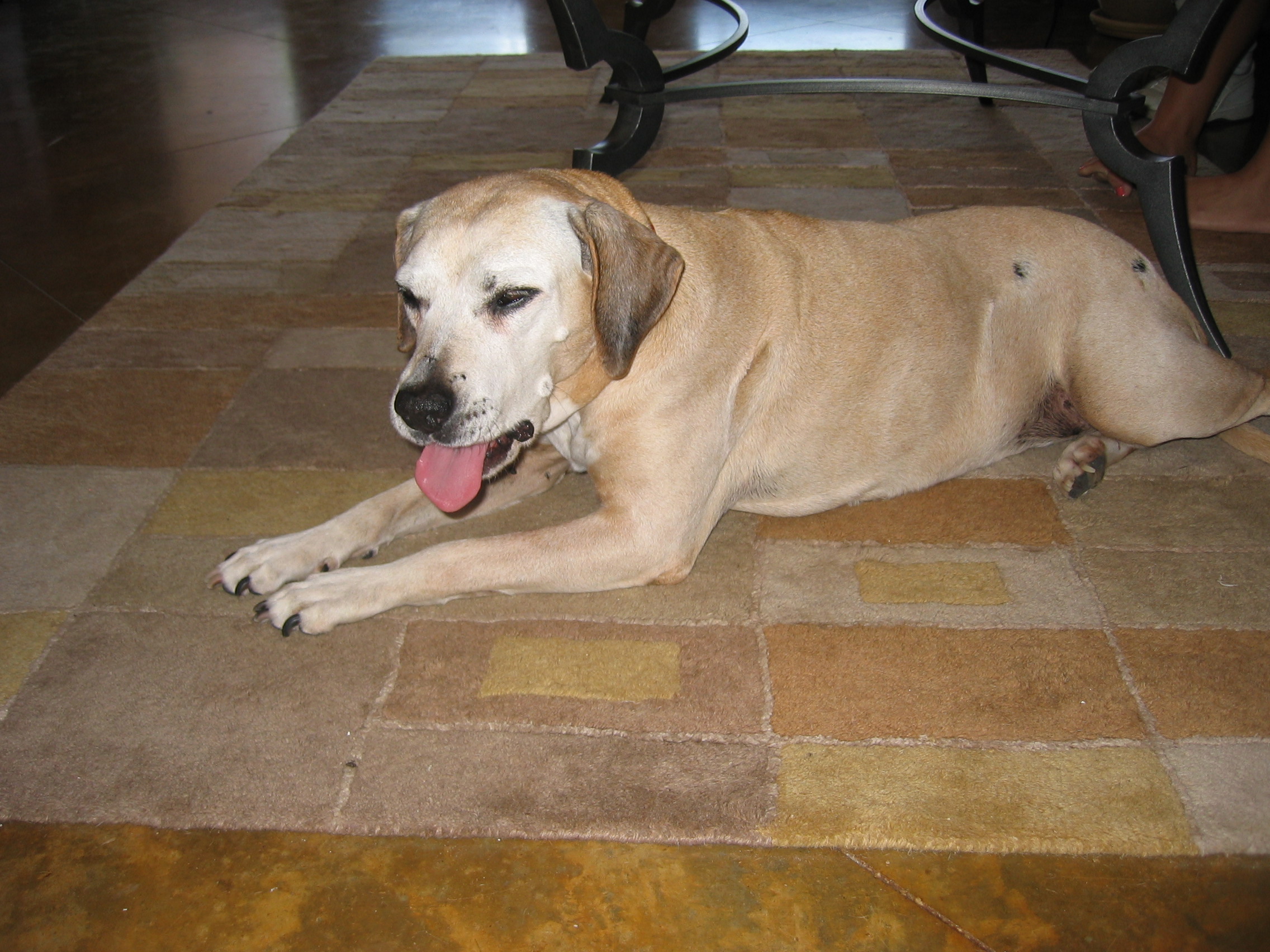
We chatter happily about our plans to get on the road, when the phone rings and we hear devastating news from the kennel owner.  Dana has been missing for twenty-four hours. The woman speculates that our dog might have been stolen.  “Lots of dog-nappers around, looking for nice dogs like yours.”  We are stunned.

The woman asks if we have a picture of Dana that we could post around the area.  Once again I give thanks for the laptop, and quickly make a notice with a picture of our sweet-faced dog.  We print copies, beg thumbtacks and tape from MJ, and post our plea to return Dana in every visible spot we can find.  And then we wait, and hope to hear, and shed a lot of tears, and pray.

On the day before we plan to leave for Ohio we receive a phone call from a woman who says she thinks she has our dog.  She had found her wandering down a road several miles from the kennel.  The woman recognized her from our poster, coaxed Dana into her car, and drove back to write our phone number down.  We all leap into the car and drive to her house to fetch Dana, who looks thin and tired but wags her tail happily.  We have no choice but to return her to the kennel for one more night.  This time, the owner promises us, she will keep Dana inside the house, and admits that Dana, with her strong pit bull muscles, had managed to pull free from the dog run in the back yard.  We cannot bear to contemplate what it would have been like to leave Opelousas without Dana.

Before we head north MJ organizes a girls’ shopping day.  I realize that I am choosing new clothes for my new life.  For the first time since leaving New Orleans I feel revived and put together, ready to face what comes next.  MJ has been so kind and thoughtful, always promoting a sense of normalcy and optimism for us.  I am indebted to her forever.

We liberate Dana from the kennel and get on the highway north on Sunday morning, September 11, each of us remembering the pain and tragedy associated with that date.  I am nervous, wondering what we are driving toward, but also relieved as we leave behind the overwhelming sadness of Louisiana for a time.

IMG_0322

Turning Points

New Worries, New Insights:  September 1, 2005

I have new worries today, but also new insights.  First, I worry about Steve.  He had developed an ear infection a few days before we left New Orleans and had finished a course of antibiotics in Houston.  By the time we got to Opelousas the infection had blossomed into something more sinister.   He was obviously ill.  MJ called her ENT doctor, who agreed to see Steve today.  Right away this doctor explains that Steve is at risk of developing malignant otitis, an infection particularly dangerous for diabetics.  He warns that without aggressive treatment the infection could travel into the brain and become meningitis, and prescribes a heavy dose of antibiotics and bed rest.

I see this as a turning point and I perceive a new role for myself.  I must now be attentive to Steve’s health in a way that was not necessary before.  I realize that his body is reacting to the stress and I will need to tone things down and stay positive for his sake.  And especially I must resolve to do things that I have never before had to do. Until he gets better, I will need to take on tasks that he has always handled so well. Disasters are no respecters of traditional roles.

Next, I worry about our son who is undergoing a personal crisis, and after Steve’s doctor’s appointment I talk with Ted about some options.  Turning point number two is the realization that life goes on and pre-existing problems do not just go away when disaster strikes.  Although we have much work to do as a family in the future, now is not the time to “fix” anything.  I know more truly than ever that I can’t fix Ted’s problems anyway.

And then there are my two dear girls.  Amanda is coping but I sense her fear and anxiety and grief, which sometimes bubble up in strong words and nervous energy.  My concern for Steve and Ted and my own grief have dominated my thoughts, and I have not given her the comfort she needs or a shoulder to lean on.  Her friends help her now and I trust that she will find her way through.  I must accept Amanda’s complicated feelings —and my own—as valid and true, and with that insight I reach turning point number three.

Dayana remains a mystery to me, but I see worry and uncertainty in her eyes, even as she smiles.  How lonely she must feel without her mother here to hug her or the English words to convey her feelings.  Ted had asked me the night before if I could get a Spanish Bible for Dayana.  When several people asked how they could help us, I passed this suggestion on. Right away several people offered to send her one. I take deep comfort in the knowledge that I only need to ask and others will find a way to help.  And that is turning point number four.

This day has been packed full and the days ahead will be even busier.  Transitions are hard work, and I acknowledge that we are in the beginning stage of a transition from our life in New Orleans to life in another place.  Steve has gone to bed early, no doubt under the spell of the antibiotic and pain reliever.  Amanda and I gather again in Ted & Dayana’s room to enact a kind of de-briefing and coming to terms with the situation at hand.  I sense the nervous energy in the room, a reactive twitching, and I think it has to do with listening to the news too much.  We have let other people’s impressions and interpretations of the disaster fuel our own worries.  I am not immune to this and feel more anxious than ever.  I crave truth and a realistic assessment of the damage.  I especially need some concrete information about what I should be doing, what steps to take now.  How will I know what to do?  Where will we go?  What will the future be like?  I drag off to bed, burdened with these questions.

Light to See By

I cannot sleep.  The room is very dark and I wish I had a night light, but slowly my eyes see the shapes around me.  I look at Steve in his twin bed across the room and long to hold him.  How far away he seems!  Beneath the blanket I tremble under the weight of worry and it seems like my brain will explode with questions.  Will Steve recover?  Will our family stay together or go separate ways?  Where will we go from here?  Do we have enough money—any money—to start over somewhere else?  Could we possibly return to New Orleans and rebuild?  What about our jobs?  Are our friends in safe places?  What does our home look like now, sitting deep in the flood waters of Hurricane Katrina?

Slowly I turn my face toward the window where a sliver of light creeps through a gap around the window shade.  Why is it so bright?  And then I see it—a slice of moonbeam coming around the edge of the curtain.  It slithers up the wall and shines right on my pillow.  I might even reach out and grab hold of that moonbeam and see the night sky that sheltered me as a child.  A rush of comfort and assurance washes me into a new place.  It is the very same moon, its reflected light shining in a different place but the same moon, the same beam of light that assured me long ago in my childhood bed on Lexington Avenue that all was right with the world and God’s universe was orderly and regulated.  Now in the deep darkness that covers Louisiana a moonbeam reveals an orderly world after all, even though what I see is strange and unknown.  That ray of light which connects me to the past also connects me to the future.  The darkness has gone away.  We will be all right.

But I still know that your moon is there,
And your eyes and also your hands.
Thus I am not afraid.

Excerpt from Prayer of a Young Christian, Ghana[1]


[1] In Marcus Braybrooke, The Bridge of Stars, no. 45


Welcome Back to Louisiana

Listen, O Lord of the meeting rivers,
Things standing shall fall
But the moving ever shall stay.
Basavanna, 12th century Hindu philosopher, poet and statesman

Early Morning Thoughts:  August 31, 2005

Nightmare says it all.  Our New Orleans home is ruined, of that I am certain.  When we left New Orleans on Saturday evening, we expected to return in three or four days, a week at the most.  Now this early Tuesday morning we are five scared, homeless people with one car, five small suitcases, and an old dog.  Surreal images float past my eyes in the dark like an ever-spooling news feed about the end of the world, the end of my world.  The voice-over whispers insistent questions:  How long until…?  What has happened to…?  Where is…?  How will you…?

After a while I tire of the nightmare and push through to wakefulness.  My mind adjusts itself to this new place.  I crave familiarity.  I want to find a place to stay put and make mine again.  The nesting impulse is overwhelming.  Our Dallas hotel is lovely, accommodating, friendly, sympathetic–but it is not home.  The sheets are stiff and scratchy when I need softness.  I can’t find comfort food, I’m sick of these clothes already, and we need to get prescription refills.

Each time I see the images of devastation on TV I breathe a prayer of gratitude for Amanda’s call to action that propelled us out of the city.  Gratitude does not reduce my fears or salve my grief, however.

And yet we have all that we need to move on.  We have each other, we have our family and friends, financial resources, offers of places to stay.  With each new call and email I witness God’s healing hand guiding us, pulling us through to safety.  And I have faith that we will move on. God will help us find the path to a new place in our lives.  May it be so for all who are suffering from this storm.

Immediate Needs

We arrive in Opelousas in early afternoon.  Steve’s cousin, MJ, welcomes us to the beautiful home she and her husband, James, built a few years before.  When I enter I hear the echoes of happy Thanksgiving meals shared with her parents and our combined families in less troubled times, and I relax in the memory.  MJ embraces us all, shows us to our rooms upstairs, and pulls me aside.  “Janice, I want you to know that this is your home while you are here.  Use the kitchen whenever you want.”  She took my hand and placed a generous amount of cash in it, wrapping my fingers around the bills.  “Buy the food your family likes.  It will help you all to feel like life is still normal.”

MJ drives us around Opelousas, pointing out Walmart, a supermarket, Walgreen’s, and the service center for state and federal agencies.  I appreciate her sensitivity to our need to feel independent and in control of our own activities.  The town of Opelousas has been greatly impacted by a disaster which took place more than 100 miles away.  Yellow school buses with familiar names and New Orleans city buses with their Mardi Gras colors are parked at Walmart.  The store is packed with people looking like we feel, a bit bedraggled, stunned, searching for life’s essential goods.

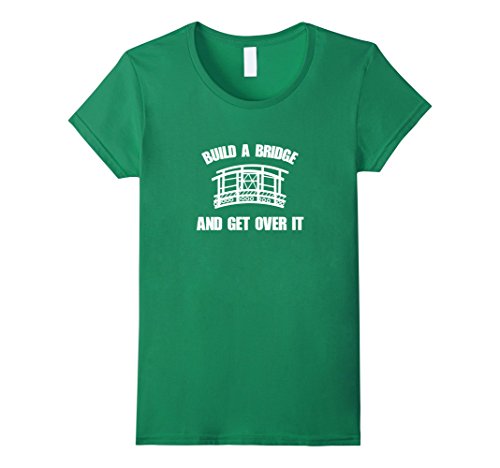
The girls spot a rack of funny t-shirts.  Dayana picks out a cute one with an airplane that says “Take off, buddy,” but Amanda finds the prize.  Her shirt has a picture of a bridge and the popular phrase, “Build a bridge and get over it.”  I vow to make that my motto.417RCGjo63L

All the streets are clogged with traffic.  MJ drives us to her church to show us the kidney dialysis center that is being set up there, along with a shelter in the fellowship hall.  MJ drops off pillows and blankets from Walmart, and tells us that James will be flipping hamburgers there the next day to feed the refugees.  I startle at the word.  “Refugee” has become my new identity.

We wait for nearly two hours at Walgreen’s to submit our refill requests for prescriptions.  While standing in line I see an acquaintance from my workplace, the Supreme Court of Louisiana.  She looks shell-shocked and exhausted as she tells me that the only place she has to stay is in a tent in a nearby park.  Her car is out of gas and she has no money.  I give her what I have to spare and tell her about MJ’s church.  Nearly everyone is uncertain about finances.  Banks, like all other services in New Orleans, were flooded and computer equipment damaged.  We don’t know when our paychecks, due to be deposited today, will be available, and we have no idea how much money is in our account or how to access it.

When we return to MJ’s, Dana is frantic in the garage, barking and running around.  Isolated, hot, and in a strange place, she craves our presence, yet the house is no place for untidy and rambunctious Dana.  MJ offers the Yellow Pages and I call a few kennels.  Most are already overcrowded with refugee dogs from New Orleans.  Finally, we find one that can take her, and we drive to the other side of Opelousas.  A woman greets us at the door and shows us where she keeps the dogs.  The place looks acceptably clean and the dogs already there appear to be fed and cared for.  We really have no other options, only hope that she will take good care of our beloved old friend.  She encourages us to call every day for a report, and I beg her to call us if anything goes wrong.  We spend a few minutes getting Dana settled and leave.  I glance back as we pull out of the driveway and see her looking forlorn.  A little frisson of worry creeps down my back.  It is terribly hard to let go of Dana, even temporarily.  I suddenly realize how truly important she is to our family, the symbol of all that we have left behind in New Orleans.

We unpack and wash clothes, make phone calls to give out our new contact information, read our email.  MJ and James take us to a cozy, local restaurant for dinner and we fill up on good Louisiana comfort food.  That night as we settle in for bed, the five of us gather in Ted and Dayana’s room to talk.  We all express our grief about what has already happened to our lives, our fears about the future.


Waiting

(Fourth in a series of memories about Hurricane Katrina.  Scroll down for earlier posts)

The Day of the Storm:  August 29, 2005

Bright sunshine streams around the edges of the curtains in our Houston hotel room.  Steve, Amanda and I are awake at 7 a.m.  We turn on the television but there is little to report.  The first ominous bands of rain are crossing Louisiana, and we no longer hear of the hurricane taking an easterly course.  Katrina is taking aim at New Orleans.

We try to go about our day with nonchalance, walking Dana around the hotel grounds, chatting in the breakfast room with other evacuees from New Orleans, sharing anecdotes of getting here.  In truth, we are all waiting for something to happen.

We find our way to the Galleria and shop, without interest or purpose.  On the way back to the hotel we stop at a supermarket to buy some food.  We have pored over the Sunday edition of the Houston Chronicle, and a recipe for chicken vegetable soup grabbed my attention.  Well, why not, I decide.  It sounds healthy and will keep my hands busy.  We have all the equipment needed for cooking in our Residence Inn suite.  By 7 p.m. we are eating an acceptable, if lackluster, meal of soup, cheese, chips and salsa, and fruit.  I feel that I have accomplished something in my cooking, creating a safety net of the ordinary out of the weirdness of waiting.  Reports of the hurricane are serious but not catastrophic for New Orleans, more a rain event than wind.  We go to bed early, hoping to hear tomorrow that we can return home.


The Day of Catastrophe:  August 30, 2005

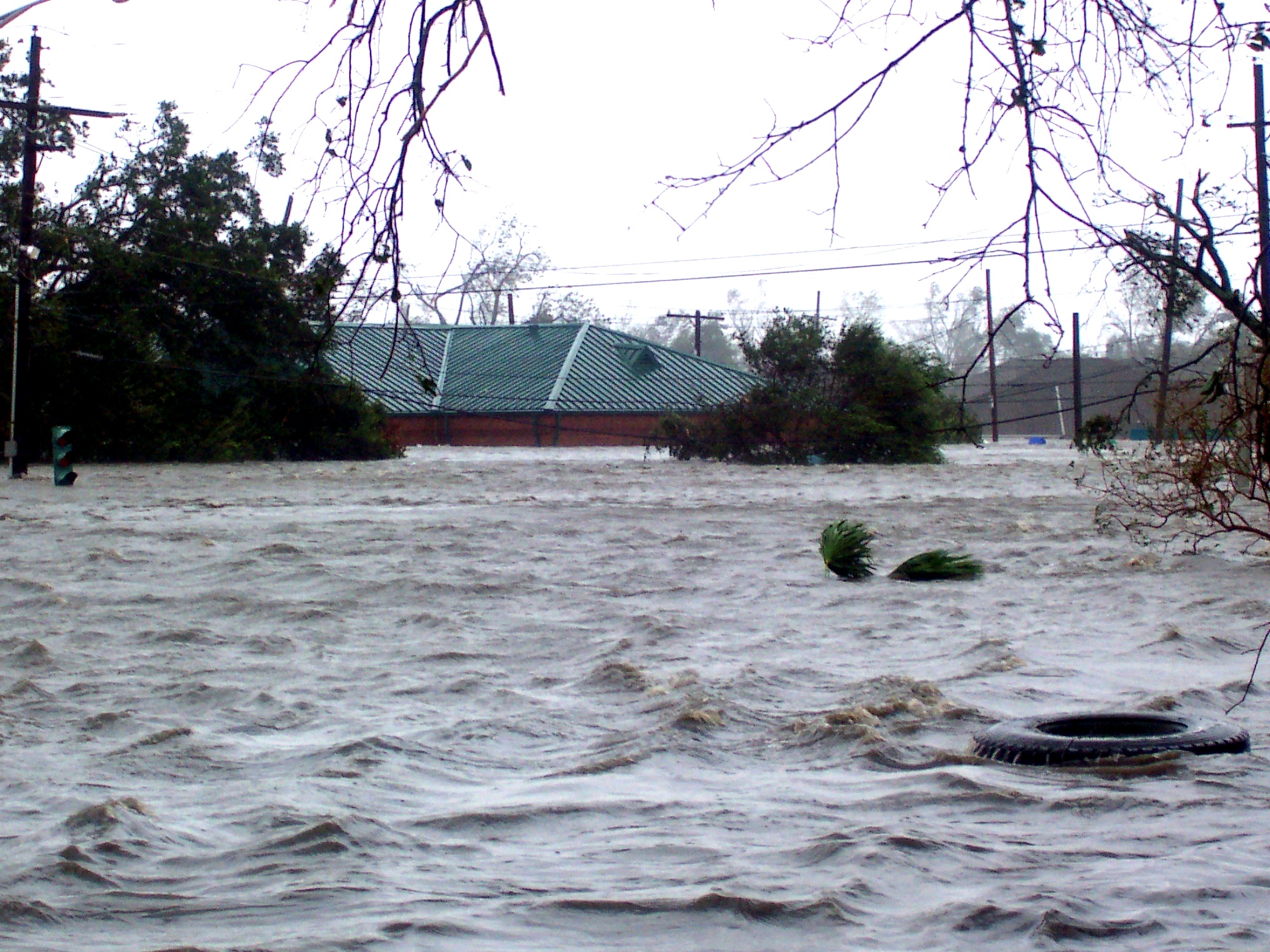
It is early in the morning, as we shower and dress, that we hear the first news of flooding.  First one levee, then another, and another, break from the pressure or are overtopped from the heavy rain.  A little after 8 a.m. we hear the reporter announce that the 17th Street Canal levee has been breached near Lake Pontchartrain.  In that moment we know there will be no going back.  If the waters of Lake Pontchartrain are now flowing over that particular levee, there is no escaping catastrophe for us.

The news hits hard but lurks in the background as we hurry to check out by 10 a.m.  It seems that Houston has been doubled by half with Louisianans fleeing the storm, and our reservation cannot be extended.  The next closest Marriott property available is a Renaissance Hotel in Dallas, three hours away.  We focus on loading the car and getting on the interstate to Dallas.  The car is very quiet as we listen to news reports of continued breaches and ever-deepening floodwaters across New Orleans.  The adrenalin pump of fear and anxiety has stilled for now.  It is time to mourn the mounting losses, to sit in silence with this new reality, to wonder how—and when—it all will end.

We check into the Renaissance Hotel.  Dana has a delightful new experience of riding an elevator up ten floors.  We all giggle at her startled look when the floor begins to rise and our laughter forces us to breathe again, exhaling worry for a moment.  It is while we are eating a late lunch that we first begin to talk about what has just happened, is still happening.  Not to each other, but with a waiter who has noticed our sad expressions, our bewildered and bereft appearance.  He listens well to our pent up grief and fear, and it is in that hotel restaurant while floodwaters still rise in New Orleans that our healing begins.  And again, when we ride the elevator with Dana, we share the beginning of our story with other hotel guests.  I hardly know how to answer when the questions come:  Is your house affected? (I don’t yet know for a fact, but yes, our house is surely flooded.)  Where will you go?  What will you do?  (I have no idea).  What will happen to New Orleans?  (silence).

Now that we are in Dallas our cell phones begin to work again for outgoing calls.  Reception had been very erratic in Houston and on the road, and still only sporadically do incoming calls get through.  It is a relief to be able to talk to my mother and Steve’s dad, and then other family members, to assure them that we are okay and to give out the hotel phone number.  We also have email access through the hotel’s wifi, and messages begin to pour in.  Communication becomes our life saver.

Steve’s cousin Mary Janet has called us, after going through quite a bit of trouble to find us.  She invites us to come and stay at their house in Opelousas, Louisiana, just a few miles from Lafayette.  A service center has been set up there for flood victims, and we will have a time and place to catch our breaths and figure out our options.  We talk it over briefly and then tell her we will arrive the next day.  I am overwhelmed by this gesture of loving kindness.

The Day of Catastrophe ends with my body exhausted from the stress, craving sleep, yet my mind has just begun to wrap itself around the enormity of the situation.  I wait in the dark for answers to my questions.  Is this true?  Is it real?  Could our house somehow have escaped the flood?  More questions that I cannot yet ask wait in the neurons of my brain.

002Flood waters rising after Hurricane Katrina

© Janice K. Shull


Before the Storm: The Improbable Day of August 28, 2005

[Third in a series of memories of Hurricane Katrina; for earlier posts, scroll down]

I am in the Winn-Dixie a few blocks from home, and I overhear a conversation:
“You buyin’ the beer?”
“Nah, Mama told me to get the water.”
“Well, who’s bringin’ the beer?”

It is Saturday, August 28, 2005, and a storm with the inappropriate name of Katrina has everybody a little on edge.  Should we go or stay?  That question has been asked thousands of times by thousands of people this morning.   We remember the fiasco of 2004 when a mass evacuation in the face of Hurricane Ivan had us trapped for hours on the Lake Pontchartrain Causeway (24 long miles to the north shore), with a dog who got carsick and folks all around us running out of gasoline.  We do not relish the thought of another evacuation.  And who knows where this storm is going?  She seems to be a wandering woman, first targeting Mexico, then Biloxi, now New Orleans.

Back home I unload my groceries and begin to cook.  I justify my distracted activity by thinking if we decide to stay in our home we will need plenty of food.  I boil a dozen eggs while I stow away the bottled water, canned goods, and protein bars in the pantry.

Ted calls to tell us that we can probably get a room at the Renaissance Arts Hotel where he works.  But what to do with Dana, our dog?  Ted expects to be told by the hotel management that he has to stay in town and work.  Our daughter Amanda polls her friends to find out who is staying, who is leaving.

The mayor’s voice on the radio speaks with as much uncertainty as we all feel.  “The City of New Orleans and I strongly encourage you to leave town now.  This is a dangerous hurricane and although it is still predicted to move toward the east before making landfall, it is currently taking direct aim at the city.”  His message is clear but we all hear the question mark at the end of his statement.  Even the mayor knows that it will be impossible for some residents to leave, and he does not want to be in the position of declaring a mandatory evacuation.  It is mid-afternoon and we still can’t decide.

Ted calls and asks me to drive to his apartment uptown to pick up Dayana, his wife of one month.  On the way, eastbound, I notice that most cars are getting on I-10 traveling westbound.  Finally people are deciding to evacuate.  When I get to their apartment, Ted comes out to the car.  He tells me that his manager told him to leave early.  He and Dayana are packing suitcases with enough clothes for a few days.  They don’t know if they will stay at our house or on the road but at least we will all decide as a family what to do.

By the time we get back to our house the roads are jammed.  Steve says emphatically that we are not going to leave, primarily because of the dog.  However, he does agree that Ted should check the Marriott website for any available rooms in the Houston area.

I turn on the oven and put in a large ham and potatoes to bake, thinking that we will want to eat dinner no matter what, and I can store the ham in our large cooler with ice if the power goes off.

The weather report is more ominous than ever:  Katrina is still headed directly for New Orleans.  How can this be?  Don’t hurricanes always steer east or west of the city at the last moment?  I begin to feel more panic, and Amanda catches the mood too.  She has been talking again with her friends and nearly everyone is evacuating, even the Imbornones who have always before stayed in the city.  It is 5:30 p.m.

Ted has found two rooms available at a Residence Inn in Houston for two nights.  In unison, Amanda and I say “Book them now!”  I hand him my credit card.  Steve is still worried about Dana in the car but he can see our very real fear.  Amanda is the one who propels us to action.  “You all, we have to leave now!”

I have the presence of mind to turn off the oven and I carefully wrap the ham in foil and place it in the refrigerator.  When we return in three days after the usual hurricane drill it will be waiting for us.  The boiled eggs are there too.

Now my legs quiver as I run around the house, tossing my clothes into a small suitcase and toiletries into my travel bag.  So much nervous energy and yet my mind is calm, thinking methodically, surveying my house and what I need to do to secure it.  I enlist everyone in carrying in my potted plants and the antique rocking chair from our back porch.

We carry the suitcases and small cooler to the car.  Dana has become morose and nervous at our preparations, thinking that she will be left behind.  At the last minute, out comes the red leash and she runs to the door, tail wagging, sure that this will be fun.  We have decided to drive just one car—our Highlander—with all five of us quite cozy and the dog tucked around our feet.  I have a twinge of sorrow at leaving behind our Solara in the garage and Amanda finds it hard to leave her pretty blue Infiniti in the driveway.

The engine is running and Steve is ready to reverse when I cry “Wait!”  I throw open the car door and run into the house, remembering the laptop upstairs.  It has my entire life in its memory or so it seems.  In my last dash through the house I take a few extra seconds to scan each room and freeze the image into my brain cells.  How will it look when we return?

It is 6:30 p.m., a mere thirty minutes since we started packing, and the interstate is crowded but moving at a steady pace.  The sky is already darkening and Steve will not be able to drive for long.  We are not hungry.  Various cell phones ring as we each hear from friends.  “Where are you going?  How’s the traffic?  Do you have a reservation?”

After many contortions and attempts to jump up on the car seat, Dana is finally calm on the floor and glad to be with us no matter what.  I check the back end to be sure that her food and dish have been packed.

Just west of Baton Rouge we pull off at a crowded truck stop to fill up and get some food.  Even in the impersonal setting of a gas station, people draw together to commiserate and worry.  The instant conversations, the shared experiences of Katrina people, have begun.  This long, bewildering August day, filled with much purposeless motion and anxious debate, ends far differently than it began.

Amanda takes over the driving and a tired silence descends into the darkness.  Headlights surround us as thousands of New Orleanians move steadily westward out of harm’s way.  Amanda drives through the maze of highways around Houston, her confidence bolstering my courage for whatever lies ahead.  We arrive at our hotel, check in, unpack, and settle in bed in record time.  By 3 a.m. we are all asleep.